Data exposure
Deleted files, failed drives and forgotten devices may still contain recoverable information.

Retire redundant technology without losing control. Collection, asset tracking, secure data erasure, refurbishment and responsible recycling — with clear records from collection through to final disposition.
The risk continues after switch-off
A collection should not be the end of your visibility. Secure IT Lifecycle agrees how equipment will be handled, recorded and moved towards a final outcome.
How we approach accountabilityDeleted files, failed drives and forgotten devices may still contain recoverable information.
Functional business equipment can be unnecessarily written off when it still has a viable second life.
Without agreed asset and outcome records, proving what happened after collection becomes difficult.
One connected service
Choose the complete process or the stages your organisation needs. Scope, processing route and reporting are agreed before work begins.
A controlled route for redundant business technology, from collection and data handling through to reuse, recycling and reporting.
Learn moreSoftware-based erasure for supported media, using an agreed method with the required outcome recorded.
Learn moreA controlled route for failed, damaged or policy-restricted storage media where erasure is unsuitable.
Learn moreAgreed records of items received, processing status, exceptions and final outcome.
Learn moreSuitable equipment is assessed, tested and prepared for a productive second life.
Learn moreNon-reusable business IT is segregated and transferred through an appropriate downstream recycling route.
Learn moreOperational visibility
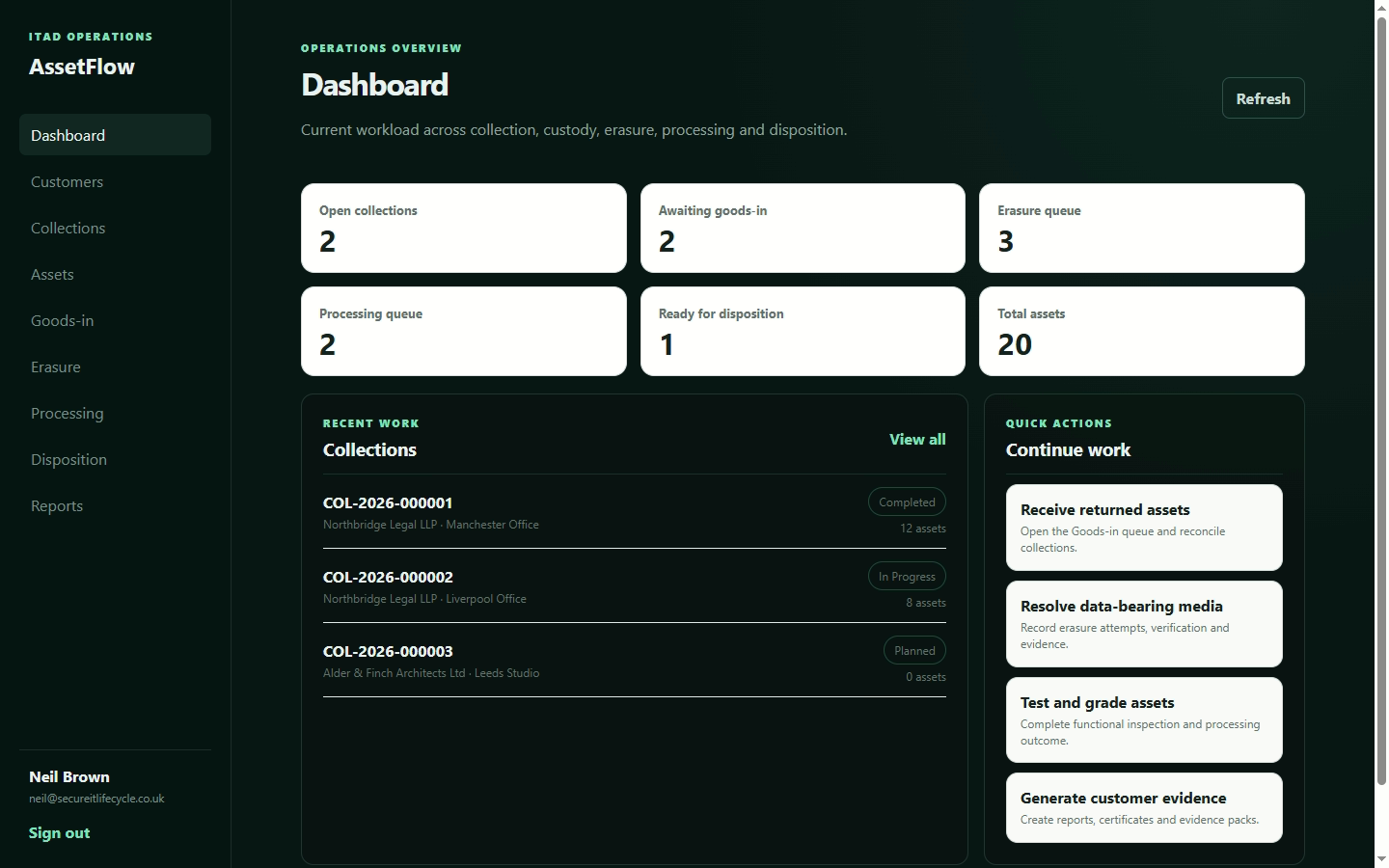
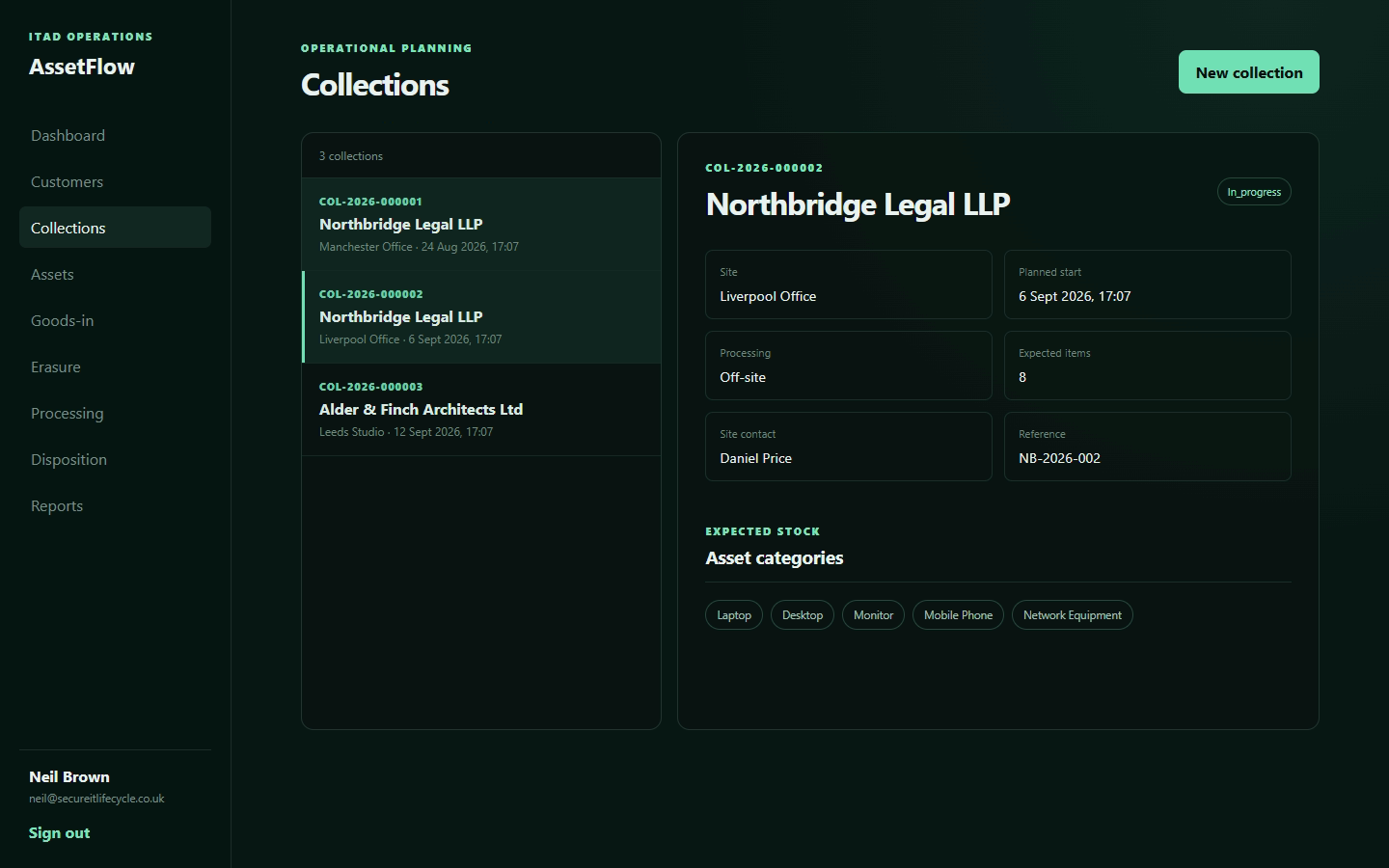
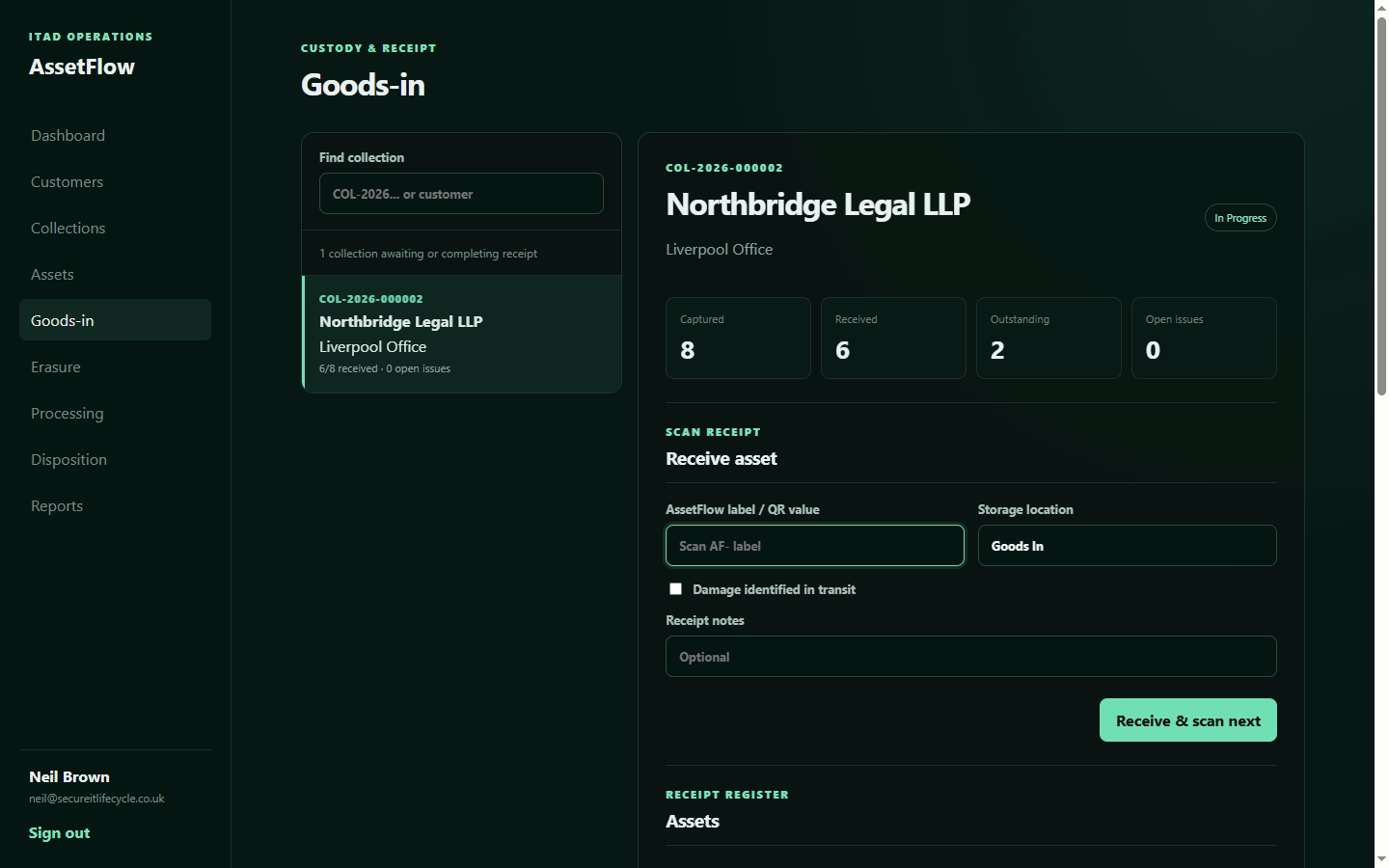
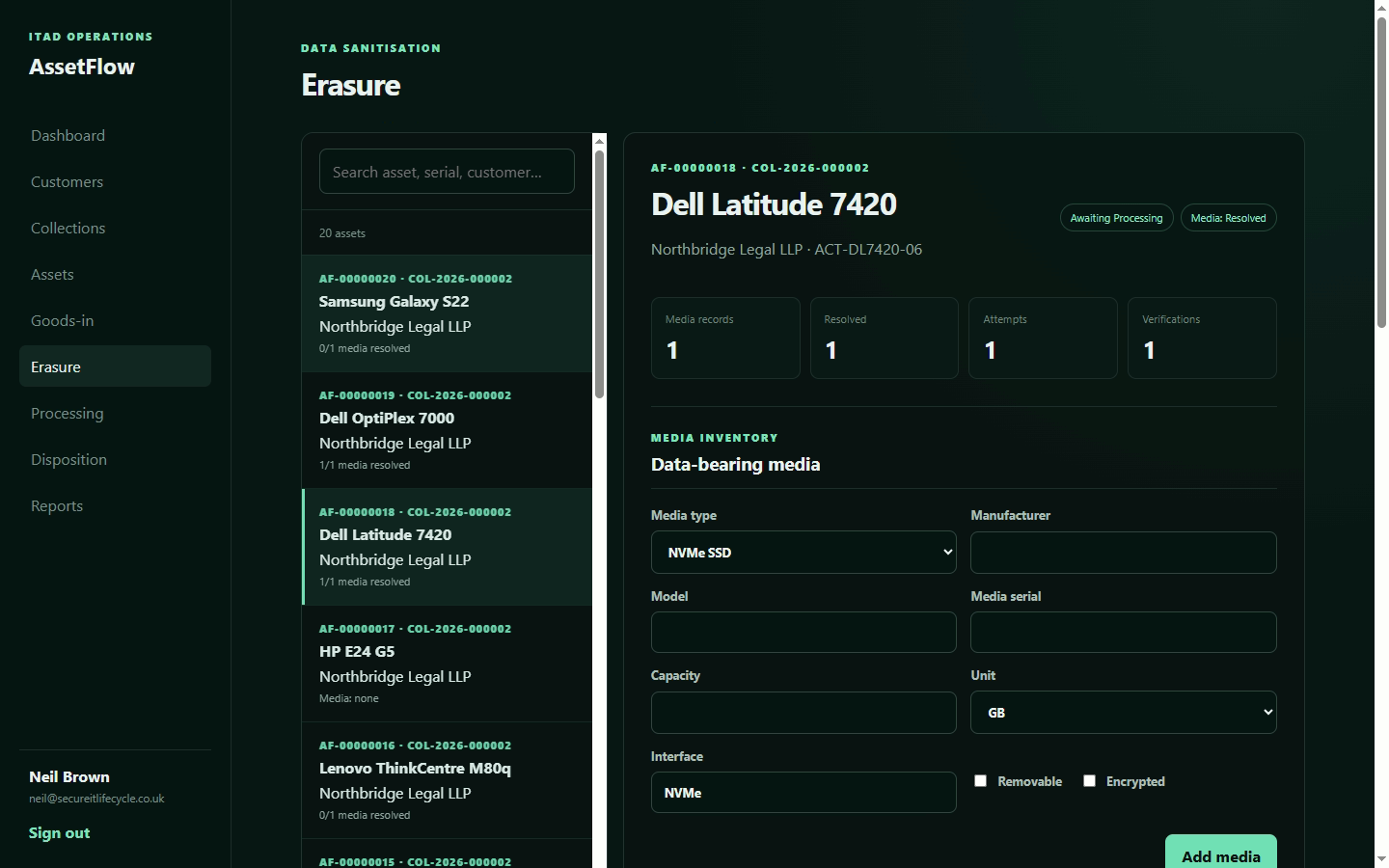
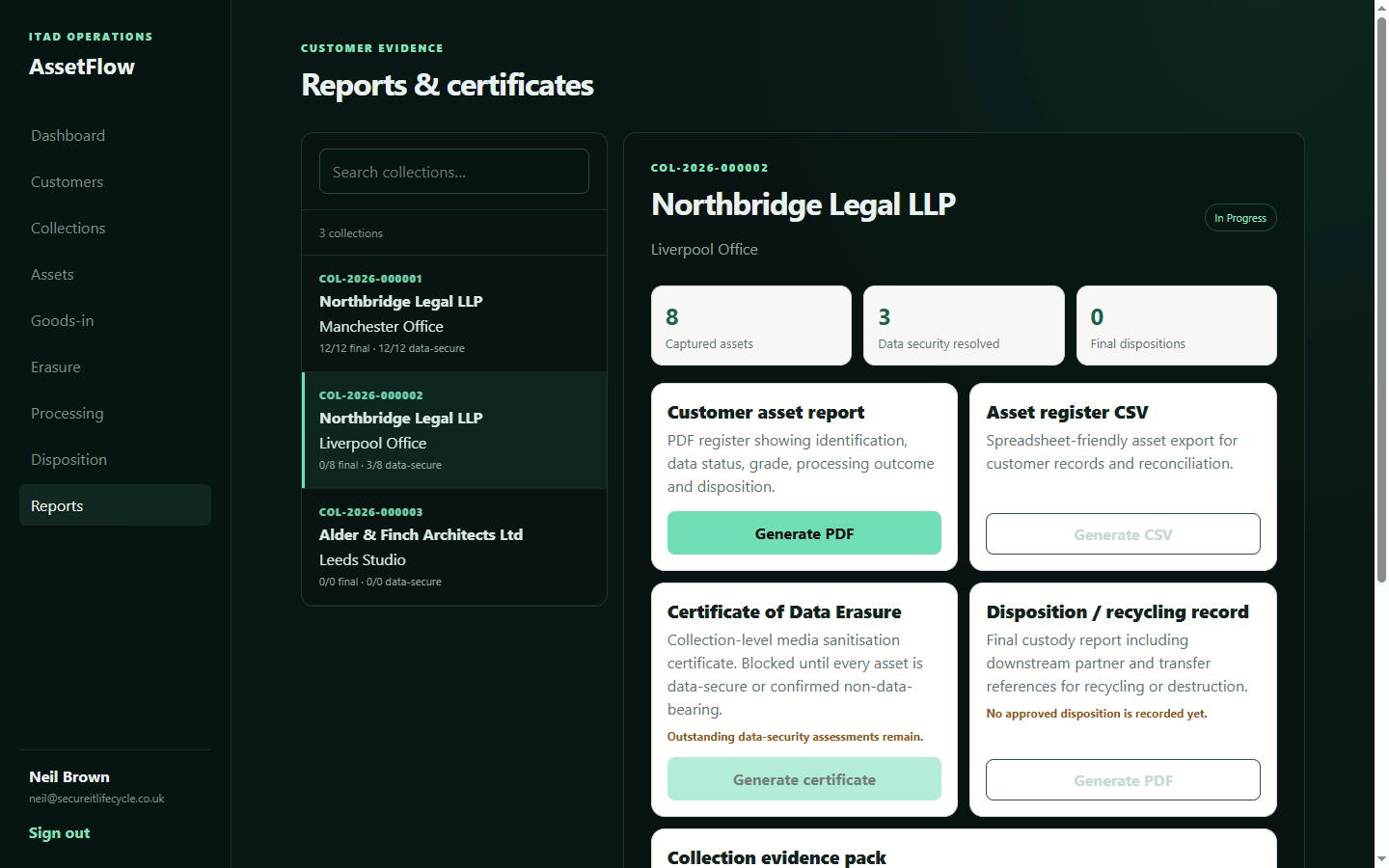
AssetFlow is our internal operational record behind collection, receipt, data handling and customer evidence. It supports the service rather than replacing the human checks and decisions behind each job. The screenshots below use synthetic demonstration data.
Plan & identify
Customer, site, expected stock and collection references are recorded so there is a defined job to reconcile against.
Custody & receipt
Goods-in records show captured, received and outstanding quantities, helping identify discrepancies before processing begins.
Data sanitisation
Data-bearing media, attempts, verification and evidence references can be recorded against the equipment they belong to.
Customer evidence
Asset reports, erasure certificates, disposition records and evidence packs provide a clear output for the customer.
Need this level of visibility?
A visible process
Each stage has a defined purpose, so equipment does not become an unrecorded pile of “old IT”.
Confirm equipment, location, access and security requirements.
Transfer accepted assets using an agreed collection and handover plan.
Record the equipment included in the agreed reporting scope.
Apply the agreed erasure or physical-destruction route to data-bearing media.
Assess, test and prepare viable equipment or components for reuse.
Provide the asset and outcome records agreed for the job.
Evidence, not assumptions
Agreed reporting provides a practical record for internal asset management, governance reviews and customer assurance.
Why Secure IT Lifecycle
You deal directly with the person responsible for assessing the collection and coordinating the work—not a call centre.
Common questions
Every project is assessed individually, but these are the questions organisations usually ask first.
Yes, in most cases. Most accepted off-site collections are completed free of charge. A charge may apply for unusual travel, restricted access, specialist or bulky equipment, on-site processing or other additional resources. Any charge is explained and agreed before booking.
On-site media-destruction requirements can be assessed where storage media cannot leave the premises before processing. Availability and charges are confirmed in advance.
Failed or unsuitable equipment is segregated for component recovery or an appropriate downstream recycling route, while storage media follows the agreed data-security process.
The reporting scope is agreed before collection and may include an asset register, processing status, exceptions and final disposition.
Tell us what you have, where it is and what records your organisation needs. We’ll assess the practical options.